
Nigerian ingredient guide
Understanding Iru, Ogiri and fermented Nigerian seasonings
Fermented seasonings create deep savoury flavour, but their raw materials, names and regional identities are not interchangeable.
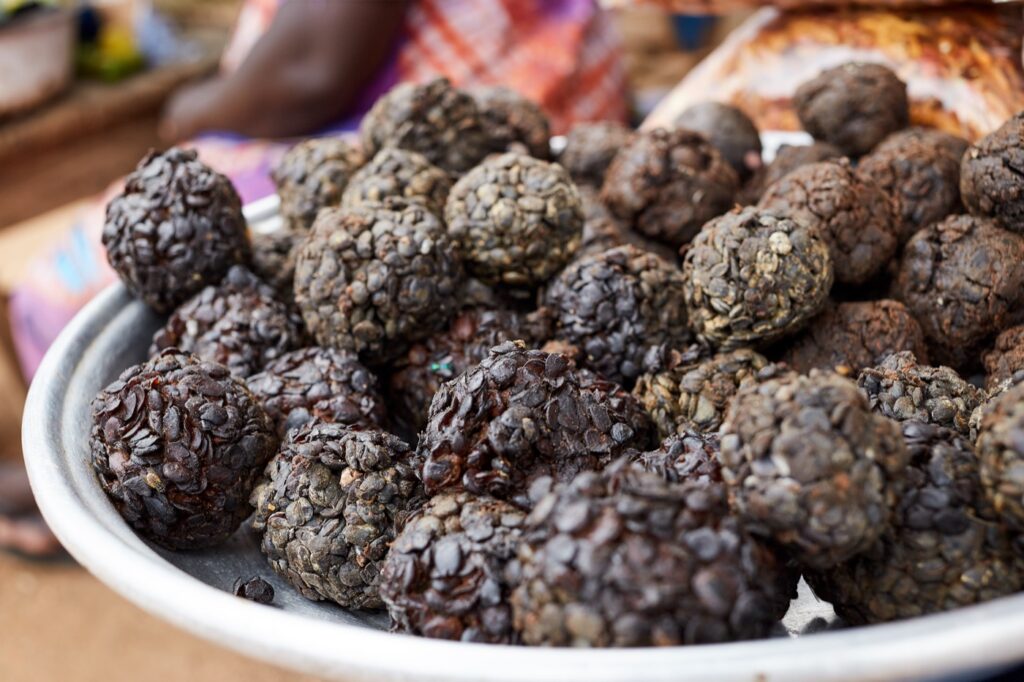
Fermented seasonings can transform a pot with a quantity that looks surprisingly small. Their strong aroma is not a flaw. It is the result of controlled microbial change that develops savoury depth.
Iru and locust beans
Iru is commonly made from fermented seeds of the African locust bean tree, Parkia biglobosa. It is strongly associated with Yoruba cooking, although fermented locust-bean seasonings and related names are found more widely across West Africa.
Ogiri is a category, not one universal product
Ogiri can be made from different oil-rich seeds. The raw material, region and producer affect the texture, aroma and allergen profile. Two products called ogiri should not be assumed to be identical.
Dawadawa and overlapping trade language
Dawadawa is another name used for fermented locust-bean seasoning. It may be close in purpose to iru, but processing style, form and cultural context can differ. A useful ingredient record needs more than the claim that both are “fermented beans”.
How to cook with fermented seasonings
Start with a small amount and give it time to disperse through soup or stew. Taste before adding salt because packaged products vary. Moist products should be stored according to producer guidance, and the raw material should be checked where allergies matter.
Why research status matters
Fermented foods are sometimes surrounded by broad health claims. Composition studies can describe nutrients or microbial processes, but they do not prove that every product prevents or treats disease. The Index keeps culinary guidance separate from ingredient research.