
Nigerian ingredient guide
Why Nigerian ingredients have so many different names
Language, region, market practice and plant form can all change the name attached to one Nigerian ingredient.
Looking for one English translation of a Nigerian ingredient can produce a surprisingly long list. That does not always mean one source is wrong. An ingredient can move between languages, regions, markets and diaspora shops, collecting names at each stage.
A local name and a botanical name do different jobs
A local name tells us how people recognise and discuss an ingredient in a particular language or place. A botanical name attempts to identify the plant species. An English common name often describes trade, appearance or flavour. None of these labels is automatically a perfect substitute for the others.
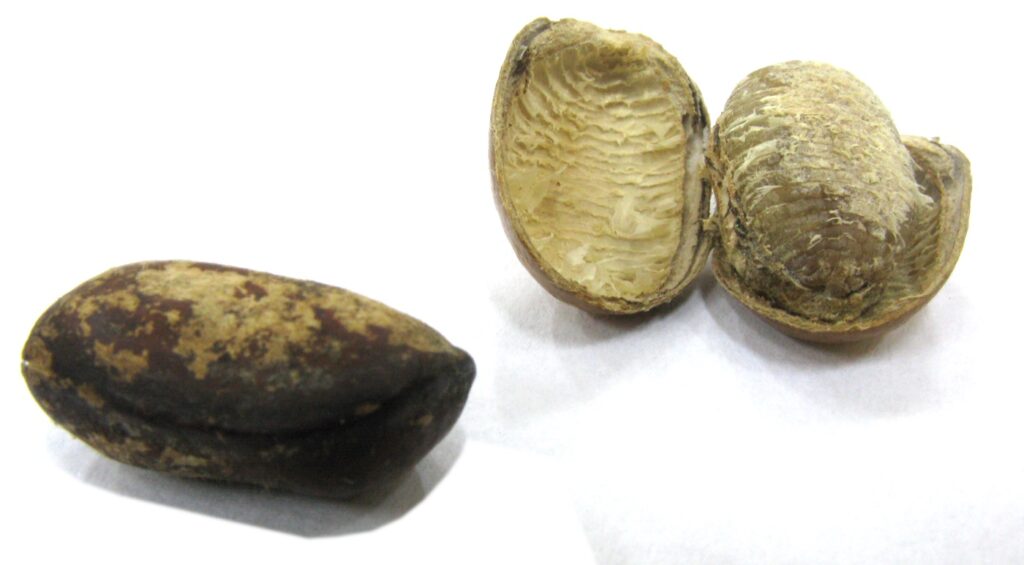
Ehuru, for example, is often called African nutmeg or calabash nutmeg in English. Those names help describe its aroma. They do not make Monodora myristica the same plant as ordinary nutmeg.
The plant part matters
Uziza leaf and uziza seed come from Piper guineense, but they are different kitchen ingredients. One name can refer to the plant as a whole, while a market label may need to specify leaf, seed, fruit or pod.
Market names can be broad
Ata rodo and Cameroon pepper are useful kitchen terms, but they do not always identify one cultivar. Blend names create another layer: pepper-soup spice and banga spice are recipes or categories, not botanical species. Our guide to Nigerian pepper names shows how appearance and kitchen role can be more useful than a forced one-word translation.
How the Nigerian Spice Index handles names
Each reviewed local name is stored with its language, spelling, region, note and status. Empty language rows are omitted. When a name is uncertain, the record remains in research rather than inventing a translation.
The result is slower than copying a list, but far more useful for identification. Search the Nigerian Spice Index by Nigerian name, English name or botanical name.