
Leaf
Utazi
Gongronemopsis latifolia
A distinctive bitter leaf used to sharpen rich soups, sauces and garnishes.
Ingredient record
Names & identity
Names can vary by language, market and region. Only reviewed names are displayed here.
| Nigerian/common name | Utazi |
|---|---|
| Botanical name | Gongronemopsis latifolia |
| IgboSouth-eastern Nigeria | UtaziThe accepted botanical name is now Gongronemopsis latifolia; older sources often use Gongronema latifolium. |
| Also known as | Gongronema latifolium |
What is Utazi?
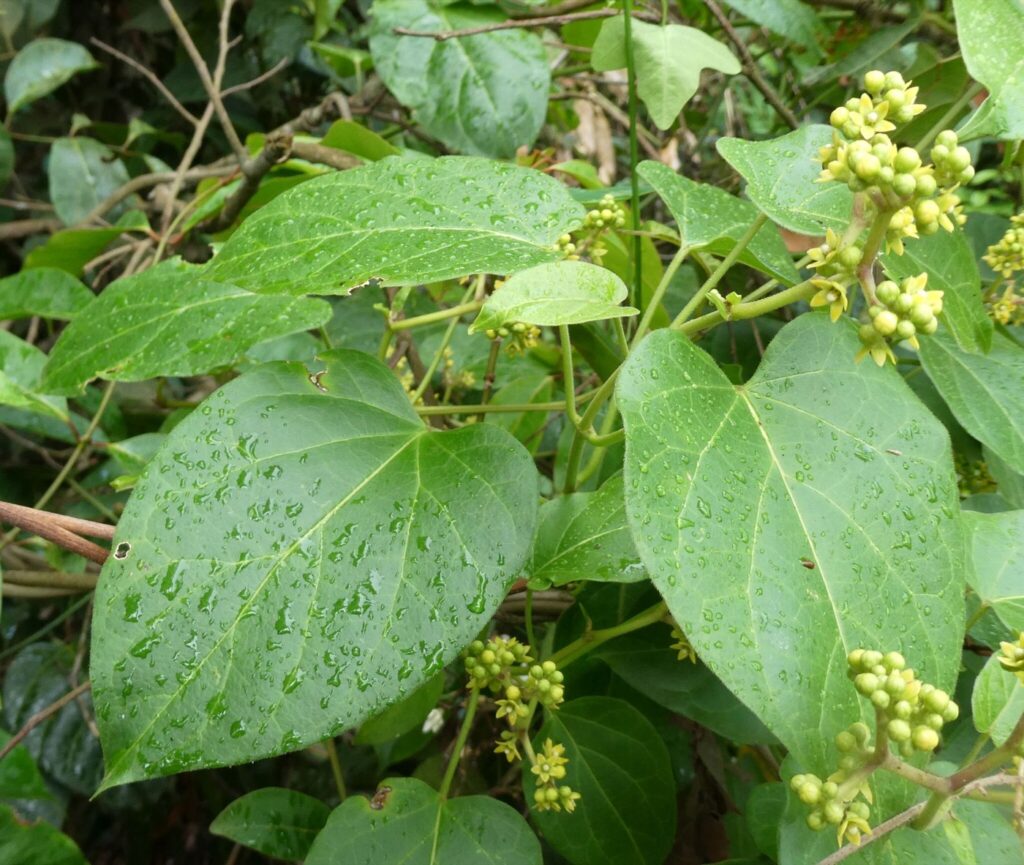
Utazi is a bitter, aromatic leaf from Gongronemopsis latifolia, a climbing plant native across parts of tropical Africa. Older literature commonly places it under the botanical synonym Gongronema latifolium.
Flavour & identification
What does it taste like?
Bitter, herbal and slightly peppery
What does it look like?
The fresh leaves are green, simple and pointed. Market bunches can resemble other soup leaves, so aroma and a trusted seller are useful checks.
Using Utazi in Nigerian cooking
How is it used?
Slice finely and add in small quantities, often near the end of cooking.
Which dishes use it?
Pepper soup garnish
Nsala
Rich soups and sauces
How do you prepare it?
Rinse and slice thinly. Add sparingly, often late in cooking or as a fresh garnish where deliberate bitterness is wanted.
How much should you use?
Begin with a few thin slices per serving. Utazi is intentionally bitter and can dominate quickly.
Buying, storing & substituting
How to store it
Refrigerate fresh leaves and use promptly; keep dried leaves airtight.
Possible substitutes
There is no exact substitute. A different bitter green may add bitterness, but not utazi's aroma.
Supporting research
Ingredient research
Research on Gongronema latifolium extracts is mainly laboratory or animal based. A 90-day rat study found dose- and sex-specific safety signals at high extract doses, reinforcing that concentrated preparations should not be equated with culinary leaves. Reliable human clinical evidence was not identified.
Sources & further reading
Reviewed by Nigerian Spices editorial desk, 27 August 2026.
Navigate the flavour map
Related & compared
Commonly confused with
Continue exploring
Related Nigerian ingredients

Aromatic Fruit
Uyayak
Aidan fruit
Aromatic • Warming
An aromatic dried fruit used to perfume broths and regional soups.
Explore Uyayak
Leaf
Okazi
African jointfir leaf
A firm leafy ingredient used in Nigerian soups, commonly associated with Gnetum species and also sold as ukazi.
Explore Okazi
International Herb
Widely used in Nigerian cookingCurry Leaf
Aromatic • Herbal
An aromatic leaf used in some contemporary Nigerian and diasporic cooking; distinct from curry powder.
Explore Curry LeafKnow another name for this ingredient? Corrections and naming suggestions are reviewed before publication.
Suggest a correction →