
Nigerian ingredient guide
Nigerian Soup Thickeners: Achi, Ofor, Ukpo and Other Traditional Ingredients
A practical, source-led comparison of achi, ofor and ukpo, how seed flours thicken soups, and why market identity and processing matter.
_Marchant_at_Lagwa,_Abo_Mbaise,_Imo_state.jpg)
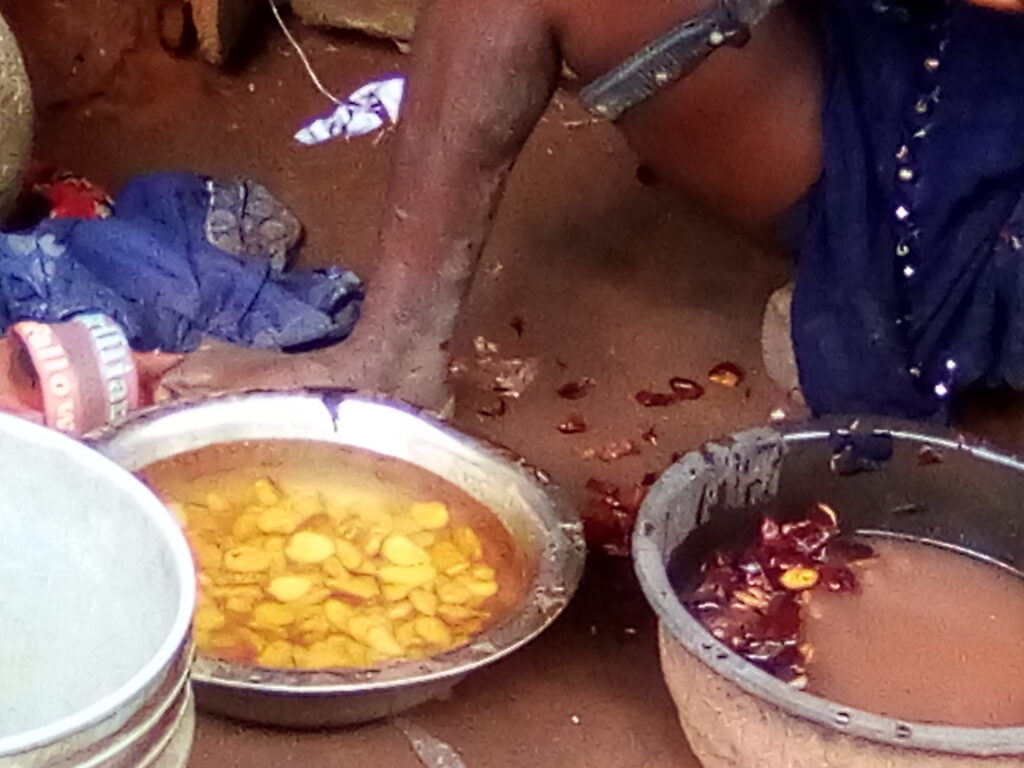
Food-science studies commonly identify achi with Brachystegia eurycoma, ofor with Detarium microcarpum, and ukpo with Mucuna sloanei. They are seed-derived thickeners, but their processing, aroma and thickening behaviour differ; market labels should still be checked.
Nigerian soups can gain body from seed flours, cocoyam, yam, okra, ogbono and reduction. Achi, ofor and ukpo deserve separate records because “thickener” describes a job, not one interchangeable ingredient.
Achi, ofor and ukpo compared
| Ingredient | Identity used in cited studies | Sold form | How to add | What to verify |
|---|---|---|---|---|
| Achi | Brachystegia eurycoma | Ground seed/flour | Disperse in liquid or sprinkle gradually while stirring | Freshness, processing and whether it is pure flour |
| Ofor | Detarium microcarpum in several food studies | Ground seed/flour | Add in small increments and allow time to hydrate | Botanical assignment: literature and market usage are not fully consistent |
| Ukpo | Mucuna sloanei | Processed ground seed/flour | Use a prepared food-grade product; stir thoroughly | Correct processing and clear product identity |
| Gbafilo | Identity review still in progress | Market form varies | Follow a trusted regional recipe and supplier | Do not infer identity from function alone |



Why processing changes the result
Studies of these seed flours compare boiling, roasting, soaking and other treatments because processing changes functional properties such as swelling, viscosity and pasting behaviour. That helps explain why two packets with the same market name can thicken at different rates.
In the kitchen, avoid dumping a large dry quantity into a boiling pot. Mix a small amount with cool liquid or add gradually while stirring, then wait before deciding the soup is too thin. Thickening can continue as the flour hydrates and the pot cools slightly.
Other traditional ways to thicken Nigerian soup
- Cocoyam paste: cooked and pounded or blended, giving body to soups such as oha in many households.
- Yam: cooked yam can be pounded into a paste and dissolved into white-soup styles.
- Okra and ogbono: thicken through mucilage and create a draw texture rather than the flour-like body of achi.
- Reduction: simmering concentrates palm-fruit and other soup bases without adding a separate flour.
Are achi, ofor and ukpo interchangeable?
Not reliably. They can all increase viscosity, but flavour, colour, processing and strength differ. Start with the thickener named in the recipe. If substituting, use a small amount and describe the change as an adaptation.
Thickeners often sit beside aromatic leaves in the same soups. Use the Nigerian soup leaves comparison to keep texture ingredients separate from finishing leaves.
Sources and further reading
- African Journal of Food Science: processing methods and functional properties of ukpo, achi and ofor
- LWT – Food Science and Technology: thermophysical properties of ofor seed flour
- Journal of Pharmacognosy and Phytochemistry: identity and composition of three southern Nigerian thickeners
- African Journal of Agriculture and Rural Development: processing and pasting properties